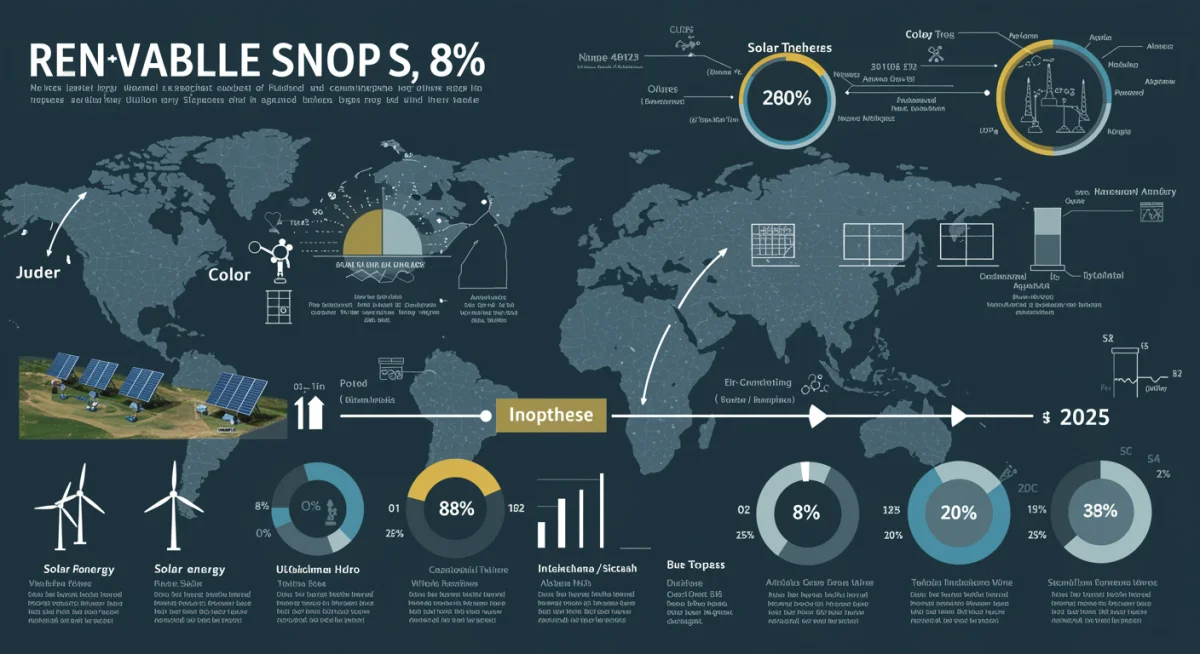
DOE Forecasts 8% Renewable Energy Surge by 2025
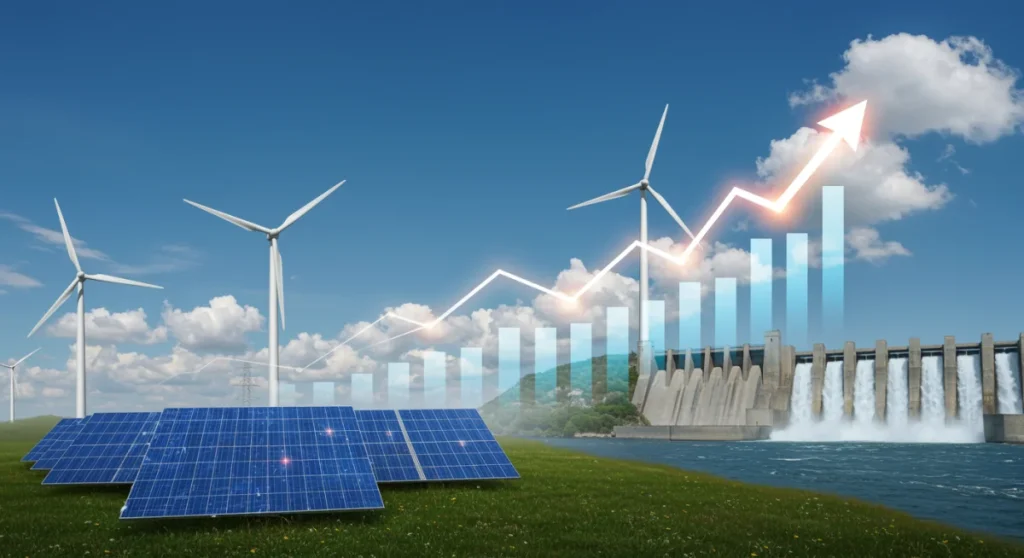
The Department of Energy forecasts an 8% increase in renewable energy production by the end of 2025, driven by technological advancements, favorable policies, and growing market demand for sustainable power solutions across the United States.
The energy landscape in the United States is undergoing a profound transformation, with a clear trajectory towards cleaner and more sustainable sources. A recent projection from the Department of Energy highlights this shift, forecasting an 8% increase in renewable energy production by the end of 2025. This anticipated surge is not merely a statistical anomaly but a reflection of concerted efforts, technological advancements, and evolving policy frameworks aimed at decarbonizing the nation’s power grid. What does this significant forecast mean for consumers, industries, and the future of energy in America?
Understanding the Department of Energy’s Projections
The Department of Energy (DOE) regularly publishes comprehensive analyses and forecasts regarding the nation’s energy outlook. These projections are critical for policymakers, industry stakeholders, and the public, offering a glimpse into future trends and potential challenges. The latest forecast, indicating an 8% rise in renewable energy production by late 2025, underscores a robust and accelerating shift towards sustainable power generation.
This projection is built upon a foundation of detailed data analysis, considering factors such as current installation rates, policy incentives, technological efficiencies, and economic viability. The DOE’s methodology involves extensive modeling that incorporates various scenarios, providing a reliable benchmark for understanding the future energy mix. The 8% increase isn’t just a number; it represents millions of additional megawatt-hours generated from sources like solar, wind, and hydropower.
Key Factors Influencing the Forecast
- Technological Advancements: Continuous innovation in solar panel efficiency, wind turbine design, and battery storage solutions significantly drives down costs and increases performance.
- Policy Support: Federal and state-level incentives, tax credits, and renewable portfolio standards create a favorable environment for renewable energy development.
- Decreasing Costs: The levelized cost of electricity (LCOE) for renewables has fallen dramatically, making them increasingly competitive with traditional fossil fuels.
- Growing Demand: Corporations and individual consumers are increasingly seeking cleaner energy options, pushing utilities to invest more in renewables.
The DOE’s forecast serves as a powerful indicator of progress, reflecting a collective commitment to addressing climate change and building a more resilient energy infrastructure. This anticipated growth will have far-reaching implications, from job creation to improved air quality, cementing renewable energy’s role as a cornerstone of the nation’s power supply.
The Driving Forces Behind Renewable Growth
The projected 8% increase in renewable energy production is not happening in a vacuum; it is the culmination of several powerful forces converging to accelerate the transition away from fossil fuels. These drivers are multifaceted, encompassing technological breakthroughs, supportive legislative frameworks, and a growing societal demand for sustainable solutions.
One of the most significant factors is the continuous innovation within the renewable energy sector. Solar panels are becoming more efficient and cheaper to produce, while wind turbines are growing larger and more capable of capturing energy even in lower wind conditions. These technological improvements directly translate into more cost-effective and reliable renewable power generation, making them an increasingly attractive option for utilities and investors alike.
Policy and Economic Catalysts
Government policies at both federal and state levels play a crucial role in fostering renewable energy growth. Initiatives such as the Investment Tax Credit (ITC) for solar and Production Tax Credit (PTC) for wind have provided essential financial incentives, making renewable projects more viable. Additionally, many states have implemented Renewable Portfolio Standards (RPS) that mandate a certain percentage of electricity come from renewable sources, creating a steady market demand.
- Investment Tax Credit (ITC): Offers a significant tax credit for solar energy systems, driving down initial installation costs.
- Production Tax Credit (PTC): Provides a per-kilowatt-hour tax credit for electricity generated from eligible renewable sources, primarily wind.
- Renewable Portfolio Standards (RPS): State-level mandates that require utilities to source a specified percentage of their electricity from renewables.
- Green Bonds and Sustainable Investments: A growing financial market for investments in environmentally friendly projects fuels capital availability for renewable energy.
The economic competitiveness of renewables is another undeniable driver. As the cost of manufacturing and installing solar and wind power drops, they increasingly outcompete traditional fossil fuel plants on a purely economic basis. This cost advantage, combined with the absence of fuel price volatility inherent in fossil fuels, makes renewables an economically sound choice for long-term energy planning. The synergy of technological advancement, supportive policies, and economic viability forms a powerful engine for the accelerated adoption of renewable energy.
Solar and Wind: The Powerhouses of the Shift
When discussing the 8% increase in renewable energy production, solar and wind power stand out as the primary contributors to this remarkable growth. These two technologies have seen exponential development over the past decade, becoming increasingly efficient, affordable, and widespread across the United States. Their combined capacity additions are expected to form the bulk of the projected increase, solidifying their roles as cornerstones of the future energy grid.
Solar energy, both utility-scale and distributed (rooftop), continues its rapid expansion. Innovations in photovoltaic cell technology have led to higher conversion efficiencies, meaning more electricity can be generated from smaller areas. Furthermore, the decreasing cost of solar panels and associated installation has made solar power accessible to a broader range of consumers and businesses, fueling its adoption across diverse sectors. The sunny states in the Southwest and Southeast are natural leaders, but solar capacity is growing nationwide.
Wind Energy’s Expanding Footprint
Wind power, particularly in the central and coastal regions of the US, is also experiencing significant growth. Modern wind turbines are engineering marvels, capable of capturing more energy with larger rotor diameters and taller towers. Offshore wind projects, once considered too complex and costly, are now gaining momentum, promising vast new sources of clean energy for coastal communities. The sheer scale and consistent output of large wind farms make them crucial for baseload power generation.
- Utility-Scale Solar: Large solar farms connected directly to the grid, providing significant power generation.
- Distributed Solar: Rooftop solar installations on homes and businesses, contributing to localized power generation and reducing grid strain.
- Onshore Wind: Wind farms located on land, typically in windy plains and agricultural areas.
- Offshore Wind: Turbines placed in oceans or large lakes, benefiting from stronger and more consistent winds.
The synergy between solar and wind is also noteworthy. They often complement each other, with solar peaking during daylight hours and wind often stronger in the evenings or overnight. This complementary nature helps to balance the grid and ensure a more consistent supply of renewable electricity. As storage solutions improve, the intermittency challenges associated with these sources are becoming less of a barrier, paving the way for even greater integration into the national grid.
Impact on the US Energy Grid and Infrastructure
An 8% increase in renewable energy production by 2025 will inevitably place new demands and opportunities on the existing US energy grid and infrastructure. While the transition to renewables offers numerous benefits, it also necessitates significant upgrades and modernization of the power transmission and distribution systems. Integrating a higher percentage of intermittent renewable sources like solar and wind requires a more flexible, resilient, and intelligent grid.
Modernizing the grid involves investing in advanced technologies, such as smart grid systems, digital controls, and enhanced communication networks. These upgrades are crucial for managing the variability of renewable output, optimizing power flow, and preventing outages. Furthermore, expanding transmission lines is essential to transport electricity from resource-rich areas (e.g., windy plains, sunny deserts) to population centers where demand is highest.
Challenges and Opportunities for Grid Modernization
The intermittency of solar and wind power presents a challenge, as their output fluctuates with weather conditions. This variability necessitates sophisticated forecasting and balancing mechanisms. However, it also creates opportunities for innovation in energy storage solutions, such as large-scale battery banks, pumped-hydro storage, and even vehicle-to-grid (V2G) technologies. These storage solutions can absorb excess renewable energy during periods of high production and release it when demand is high or renewable output is low.
- Grid Modernization: Upgrading aging infrastructure with smart technologies for better management and resilience.
- Transmission Expansion: Building new power lines to connect renewable generation sites to demand centers.
- Energy Storage: Implementing battery storage, pumped hydro, and other solutions to manage renewable intermittency.
- Demand-Side Management: Empowering consumers to adjust their energy consumption in response to grid conditions and price signals.
The shift towards renewables also fosters a more decentralized energy system, with more localized generation sources. This decentralization can enhance grid resilience by reducing dependence on large, centralized power plants. While the challenges of grid integration are significant, the ongoing investments and technological advancements are steadily paving the way for a robust and renewable-powered future, making the grid more reliable and sustainable.
Economic and Environmental Implications
The Department of Energy’s forecast of an 8% increase in renewable energy production by late 2025 carries profound economic and environmental implications for the United States. This growth is not merely about kilowatt-hours; it represents a fundamental shift in how the nation powers itself, with ripple effects across various sectors of the economy and significant benefits for environmental quality.
Economically, the expansion of renewable energy is a powerful job creator. From manufacturing solar panels and wind turbines to installing and maintaining them, the renewable sector generates a wide array of employment opportunities. These jobs span engineering, construction, project management, and various technical roles, often providing well-paying positions in both urban and rural areas. Furthermore, local communities hosting renewable energy projects often benefit from increased tax revenues and land lease payments, stimulating local economies.
Environmental Benefits and Public Health
Environmentally, the most significant impact of increased renewable energy is the reduction in greenhouse gas emissions. By replacing fossil fuel-based electricity generation, renewables directly contribute to mitigating climate change, helping the US meet its carbon reduction targets. This also leads to improved air quality, as the burning of coal and natural gas releases pollutants that contribute to smog, acid rain, and respiratory illnesses.
- Job Creation: Growth in manufacturing, installation, and maintenance sectors within renewable energy.
- Economic Development: Increased tax revenues and land lease payments for communities hosting renewable projects.
- Reduced Emissions: Significant decrease in greenhouse gases and air pollutants, combating climate change and improving public health.
- Energy Independence: Less reliance on imported fossil fuels, enhancing national energy security.
Beyond emissions, renewables also reduce water consumption associated with cooling thermal power plants and minimize the environmental impact of fossil fuel extraction and transportation. The shift towards a cleaner energy portfolio also enhances national energy security by reducing dependence on volatile global fossil fuel markets, fostering greater energy independence for the United States. The economic prosperity and environmental stewardship offered by this transition underscore its importance for the nation’s future well-being.
The Road Ahead: Challenges and Future Outlook
While the Department of Energy’s forecast of an 8% increase in renewable energy production by 2025 is highly encouraging, the path forward is not without its challenges. Sustaining this growth and fully transitioning to a clean energy economy will require ongoing innovation, strategic policy decisions, and significant investment. Understanding these hurdles and planning for them is crucial for ensuring continued success.
One of the primary challenges lies in grid modernization and the integration of even higher percentages of intermittent renewables. As mentioned, the existing grid was designed for centralized, dispatchable power plants. Adapting it to accommodate numerous distributed and variable sources requires substantial investment in smart grid technology, energy storage, and expanded transmission infrastructure. Permitting processes for new transmission lines and large-scale renewable projects can also be lengthy and complex, slowing down deployment.
Overcoming Obstacles and Seizing Opportunities
Another area requiring attention is the supply chain for renewable energy components. As global demand for solar panels, wind turbines, and battery materials increases, ensuring a robust and resilient supply chain, particularly for critical minerals, becomes paramount. Investing in domestic manufacturing and recycling capabilities can help mitigate these risks and create more jobs within the US.
- Grid Infrastructure Development: Continued investment in smart grids, transmission lines, and distribution networks.
- Energy Storage Solutions: Research, development, and deployment of advanced and cost-effective storage technologies.
- Supply Chain Resilience: Strengthening domestic manufacturing and securing critical material supply for renewable components.
- Policy Consistency: Ensuring stable and long-term policy frameworks that support renewable energy growth.
Despite these challenges, the outlook for renewable energy remains overwhelmingly positive. Continued research and development promise even more efficient and affordable technologies. Public and private sector commitment to sustainability is growing, and the economic benefits of renewables are increasingly clear. With strategic planning and collaborative efforts, the United States is well-positioned to not only meet but exceed the DOE’s 2025 forecast, advancing towards a truly sustainable and secure energy future.
| Key Point | Brief Description |
|---|---|
| DOE Forecast | 8% increase in renewable energy production by end of 2025. |
| Main Drivers | Technological advancements, policy support, and decreasing costs. |
| Key Technologies | Solar and wind power are the primary contributors to growth. |
| Impacts | Job creation, reduced emissions, and grid modernization efforts. |
Frequently Asked Questions About Renewable Energy Growth
For average consumers, this increase signifies a cleaner, potentially more stable, and eventually more affordable energy supply. It could lead to reduced electricity bills over time as renewable costs continue to fall, and contributes to better air quality and a healthier environment for communities nationwide.
The primary drivers of this growth are solar and wind power. Both utility-scale and distributed solar installations, along with onshore and offshore wind farms, are seeing significant expansion due to technological advancements, decreasing costs, and supportive policy frameworks across the United States.
Integrating more renewables requires significant grid modernization. This includes investments in smart grid technologies, expanded transmission lines, and advanced energy storage solutions. These upgrades are crucial for managing the variability of renewable sources and ensuring a resilient and reliable power supply.
The main environmental benefits include a substantial reduction in greenhouse gas emissions, directly contributing to climate change mitigation. Additionally, it leads to improved air quality by decreasing pollutants from fossil fuel combustion, and reduces water consumption associated with traditional power generation.
Challenges include the need for continuous grid upgrades, the complexity of permitting new infrastructure, and ensuring a resilient supply chain for renewable components. Policy consistency and sustained investment in research and development will be essential to overcome these hurdles and maintain momentum.
Conclusion
The Department of Energy’s forecast of an 8% increase in renewable energy production by the end of 2025 marks a pivotal moment in the nation’s energy transition. This trajectory, driven by technological innovation, strategic policy support, and compelling economic advantages, underscores a profound commitment to a sustainable future. While challenges related to grid integration and supply chain resilience persist, the overarching trend points towards a cleaner, more resilient, and ultimately more secure energy landscape for the United States, benefiting both the economy and the environment for generations to come.
Autor