Immigration Reform Debate 2026: New Legislation, 11 Million Undocumented
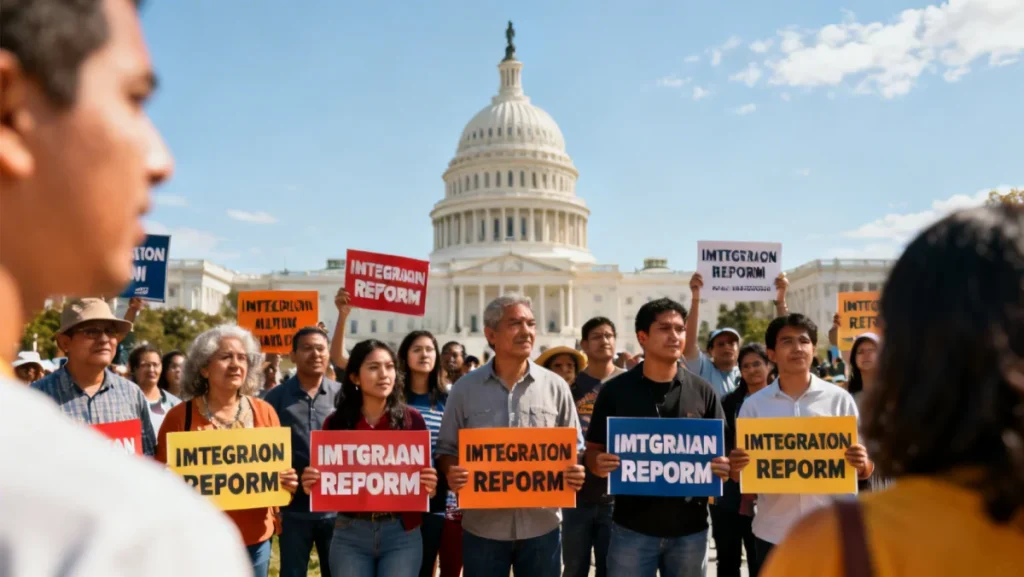
The 2026 immigration reform debate is gaining momentum with new legislative proposals poised to significantly reshape the lives of an estimated 11 million undocumented individuals in the United States, driving intense public and political discourse.
The ongoing discussion surrounding immigration reform 2026 has reached a critical juncture, with recent legislative proposals signaling a potential paradigm shift in how the United States addresses its undocumented population. This isn’t just about policy; it’s about the lives of millions, the future of communities, and the very fabric of American society. Let’s delve into what these new updates mean for the estimated 11 million undocumented individuals and the nation as a whole.
Understanding the current immigration landscape
The United States has long grappled with a complex immigration system, characterized by outdated laws and a growing population of undocumented individuals. The current landscape is a mosaic of diverse communities, economic contributions, and persistent legal ambiguities that demand comprehensive attention. Understanding these foundational elements is crucial before we can fully grasp the implications of proposed reforms.
Estimates consistently place the undocumented population at around 11 million, a figure that has remained relatively stable over the past decade despite various enforcement efforts. These individuals live across the country, working in essential sectors, raising families, and contributing to local economies. Their presence is deeply interwoven with American society, making any legislative changes far-reaching in their effects.
The economic and social contributions of undocumented immigrants
Undocumented immigrants play a significant role in the U.S. economy, often filling labor demands in sectors such as agriculture, construction, hospitality, and caregiving. Their contributions extend beyond labor, including consumer spending and tax payments, albeit sometimes indirectly. Socially, they are integral members of many communities, forming families and cultural ties that enrich the nation’s diversity.
- Economic Impact: Contribute billions annually through taxes and consumer spending.
- Labor Force: Fill critical labor gaps in various industries.
- Community Integration: Establish deep roots within American communities, raising U.S. citizen children.
- Cultural Enrichment: Add to the diverse cultural tapestry of the nation.
However, their undocumented status leaves them vulnerable to exploitation, limits their access to social services, and creates a perpetual state of uncertainty. This vulnerability underscores the urgent need for a stable and humane legal framework. The existing system, with its backlogs and limited pathways to legal status, has proven inadequate in addressing these realities, setting the stage for the renewed push for immigration reform 2026.
The core tenets of proposed 2026 legislation
New legislative proposals emerging in 2026 are attempting to tackle the intricate challenges of immigration reform head-on. These proposals often feature a multi-pronged approach, aiming to strike a balance between border security, economic needs, and humanitarian concerns. At their heart, many seek to provide a pathway to legal status for long-term undocumented residents, while also modernizing enforcement and streamlining legal immigration processes.
One of the most significant aspects of these new bills is the focus on creating a structured process for eligible undocumented individuals to gain legal residency, and eventually, citizenship. This pathway is typically contingent upon several factors, including continuous residency in the U.S., a clean criminal record, and the payment of back taxes or fees. Such provisions aim to integrate these individuals more fully into society, allowing them to openly contribute without fear of deportation.
Key components of new legislative frameworks
The proposed legislation often includes several crucial elements designed to address various facets of the immigration system. These components are intended to create a more comprehensive and functional framework.
- Pathway to Citizenship: Establishing clear, albeit often rigorous, routes for undocumented immigrants to apply for legal status.
- Border Security Enhancements: Investing in technology, personnel, and infrastructure at the U.S. borders to deter illegal crossings.
- Streamlined Legal Immigration: Reforming visa categories and quotas to better align with economic and family reunification needs.
- Worker Programs: Expanding and improving guest worker programs to meet labor demands in industries reliant on immigrant labor.
Beyond these core elements, some proposals also touch upon issues of asylum processing, judicial review, and the protection of vulnerable populations, such as DREAMers. The goal is to create a system that is both orderly and humane, capable of adapting to future challenges. These comprehensive approaches reflect a growing recognition that piecemeal solutions have not adequately addressed the systemic issues, making the current push for immigration reform 2026 particularly vital.
Potential impact on 11 million undocumented individuals
The ramifications of the proposed immigration reform 2026 for the estimated 11 million undocumented individuals are profound and far-reaching. For many, this legislation represents a beacon of hope, offering the possibility of stability, security, and a future free from the constant threat of deportation. It could unlock their full potential, both economically and socially, allowing them to fully participate in American life.
Receiving legal status would mean access to better job opportunities, higher wages, and improved working conditions, as individuals would no longer be confined to the shadow economy. It would also grant them greater access to education, healthcare, and social services, improving their overall quality of life and that of their families. The psychological relief of living without constant fear of separation from loved ones would be immeasurable.
Economic and social benefits of legalization
Legalizing a significant portion of the undocumented population is projected to generate substantial economic benefits for the entire country, not just for the individuals themselves. It could boost economic growth, increase tax revenues, and reduce reliance on social safety nets.
- Increased Wages and Tax Revenue: Legal workers generally earn more and pay more taxes.
- Economic Growth: Greater consumer spending and entrepreneurial activity.
- Improved Health Outcomes: Access to healthcare leads to a healthier workforce and reduced emergency room visits.
- Family Stability: Reduces stress and improves well-being for mixed-status families.
However, the path to legalization is often complex, requiring extensive documentation, legal assistance, and the ability to navigate bureaucratic hurdles. Not all 11 million individuals may qualify or be able to meet the requirements, leading to potential disparities. The success of any reform will depend heavily on robust implementation, clear guidelines, and accessible resources to assist applicants, ensuring that the promise of immigration reform 2026 translates into tangible change for those it aims to help.
The political and public debate surrounding reform
The debate over immigration reform 2026 is not merely a policy discussion; it’s a deeply entrenched political and public discourse that touches upon fundamental questions of national identity, economic fairness, and humanitarian responsibility. The proposed legislation faces intense scrutiny from various political factions, advocacy groups, and the general public, each with their own perspectives and priorities.
On one side, advocates for comprehensive reform emphasize the moral imperative to address the plight of long-term residents who have contributed to American society. They highlight the economic benefits of legalization and the practical inefficiencies of the current system. They argue that providing a pathway to citizenship is both an economic and a humanitarian necessity, aligning with American values of opportunity and inclusion.
Key arguments from different perspectives
The discourse is characterized by a wide range of arguments, reflecting the diverse concerns and values within the American populace. Understanding these different viewpoints is essential to grasp the complexity of the debate.
- Pro-Reform Arguments: Focus on economic contributions, humanitarian concerns, and the need for a stable workforce.
- Border Security Advocates: Prioritize stricter enforcement and control over borders before considering pathways to legal status.
- Fiscal Conservatives: Raise concerns about potential costs of legalization and social services, advocating for merit-based systems.
- Labor Unions: Divided, with some supporting protections for all workers and others concerned about potential impacts on wages for native-born workers.
Conversely, opponents often raise concerns about border security, the rule of law, and the potential strain on social services and infrastructure. They argue that any reform must first secure the borders and deter future unauthorized immigration before considering legalization for those already here. The political polarization surrounding immigration makes consensus building incredibly challenging, yet the urgency of the issue continues to push immigration reform 2026 to the forefront of national dialogue.
Challenges and opportunities for bipartisan cooperation
Achieving meaningful immigration reform 2026 will undoubtedly require significant bipartisan cooperation, a rare commodity in today’s political climate. The historical difficulty in passing comprehensive immigration legislation underscores the deep divisions and ideological chasms that exist. However, the current moment also presents unique challenges and opportunities that could potentially pave the way for a breakthrough.
One of the primary challenges is overcoming the entrenched partisan positions that often prioritize political posturing over practical solutions. Immigration has become a highly charged issue, making compromise difficult. Furthermore, the sheer scope of the problem, involving millions of individuals and complex legal frameworks, demands a level of legislative detail and consensus that is hard to achieve. Building trust between opposing sides will be crucial for any progress.
Strategies for fostering compromise
Despite the difficulties, there are strategies and approaches that could potentially facilitate bipartisan agreement on immigration reform. These often involve finding common ground and framing the issue in ways that appeal to diverse interests.
- Focus on Economic Benefits: Highlighting the positive economic impacts of legalization for all Americans.
- Phased Approach: Breaking down comprehensive reform into smaller, more manageable legislative packages.
- Data-Driven Policy: Relying on objective data and expert analysis to inform policy decisions, rather than rhetoric.
- Community Engagement: Involving diverse stakeholders, including businesses, labor groups, and immigrant communities, in the reform process.
Opportunities for cooperation may arise from shared concerns, such as the need for a stable workforce, the desire to reduce the strain on border resources, and the humanitarian impulse to address the status of long-term residents. A focus on practical, results-oriented solutions, rather than ideological purity, could unlock pathways to compromise. The success of immigration reform 2026 hinges on leaders’ willingness to transcend partisan divides and work collaboratively towards a common national interest.
Looking ahead: the future of immigration in the U.S.
The outcome of the immigration reform 2026 debate will have lasting implications for the future of immigration in the United States. Whether a comprehensive bill passes, or if only incremental changes are made, the discussion itself is shaping public opinion and setting the stage for future policy initiatives. The choices made now will define how the nation manages its borders, integrates new populations, and upholds its values for decades to come.
Should significant reform pass, it could lead to a more orderly and efficient immigration system, reducing the number of undocumented individuals and fostering greater economic and social stability. It might also address critical labor shortages and provide a clearer legal framework for future immigration. Conversely, a failure to pass meaningful reform could exacerbate existing problems, leading to continued uncertainty for millions and ongoing challenges at the border.
Long-term implications of legislative decisions
The decisions made regarding immigration reform extend far beyond the immediate legislative cycle, impacting various aspects of American society in the long run.
- Demographic Shifts: Changes in immigration policy directly influence the nation’s demographic composition.
- Economic Competitiveness: A well-managed immigration system can enhance global competitiveness.
- International Relations: Immigration policies often reflect and impact diplomatic relationships with other countries.
- Social Cohesion: The integration of immigrant populations is vital for social harmony and progress.
Regardless of the legislative outcome, the conversation around immigration will undoubtedly continue to evolve. Technological advancements, global events, and changing economic needs will all play a role in shaping future immigration policies. The current push for immigration reform 2026 serves as a critical moment, forcing the nation to confront its past, assess its present, and envision a more just and effective future for all who call America home.
| Key Aspect | Brief Description |
|---|---|
| Undocumented Population | Estimated 11 million individuals in the U.S. impacted by potential reforms. |
| Legislative Focus | Proposals aim for pathways to legal status, border security, and system modernization. |
| Economic Impact | Legalization could boost GDP, increase tax revenues, and fill labor gaps. |
| Political Challenges | Bipartisan cooperation is critical but difficult amidst deep ideological divides. |
Frequently asked questions about immigration reform 2026
The primary goal is to create a comprehensive framework that addresses border security, provides a pathway to legal status for long-term undocumented residents, and modernizes the existing legal immigration system to better meet national needs.
It is estimated that the proposed legislation could directly impact around 11 million undocumented individuals currently residing in the United States, offering potential avenues for legal residency and citizenship.
Legalization is projected to boost the economy through increased tax revenues, higher consumer spending, and a more stable, productive workforce, while also reducing the exploitation of labor.
Significant political hurdles include deep partisan divisions, disagreements over border security measures, and varying ideological perspectives on how to address the undocumented population, making bipartisan consensus challenging.
Many of the proposed 2026 immigration reforms specifically include provisions aimed at providing permanent legal protections and a pathway to citizenship for DREAMers, who were brought to the U.S. as children.
Conclusion
The immigration reform 2026 debate stands as a pivotal moment for the United States, with new legislation holding the potential to significantly reshape the lives of 11 million undocumented individuals and the nation’s future. While the path to comprehensive reform is fraught with political complexities and diverse viewpoints, the necessity of addressing this long-standing issue remains undeniable. The outcomes of these legislative efforts will not only impact economic stability and social cohesion but will also define America’s identity as a nation grappling with its foundational principles of opportunity and justice. The ongoing dialogue underscores a critical opportunity for leaders to forge a bipartisan path forward, establishing a humane, efficient, and equitable immigration system for generations to come.
Autor