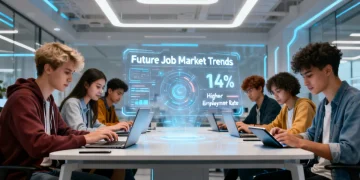
New Education Technology 2026: 25% Learning Efficiency Boost
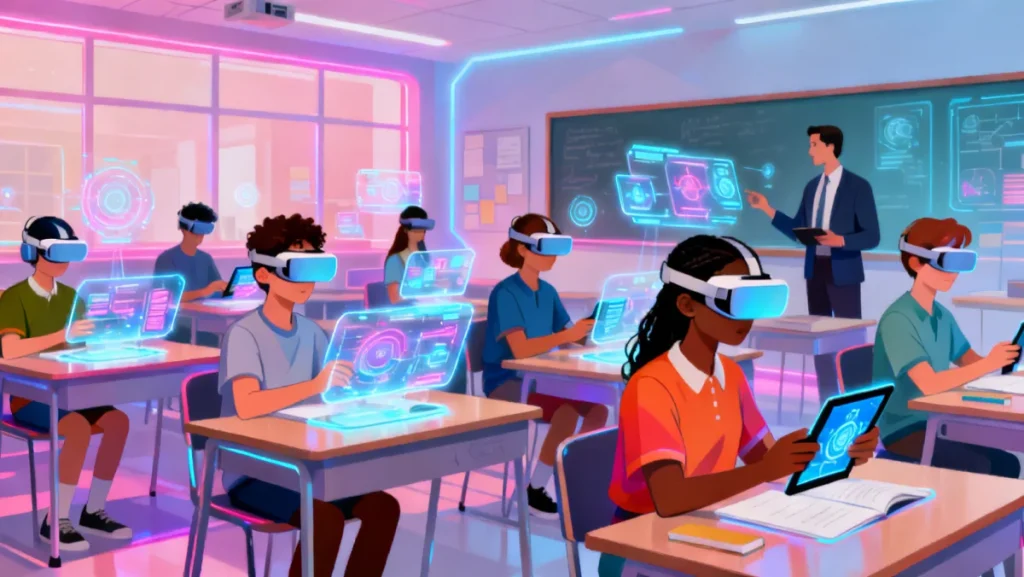
By 2026, new education technology is poised to dramatically enhance learning, with innovations like artificial intelligence and virtual reality driving a projected 25% increase in educational efficiency and student engagement.
The landscape of education is continuously evolving, and by 2026, the integration of new education technology in 2026 is set to redefine how students learn and educators teach. This transformation isn’t just about adopting new gadgets; it’s about strategically leveraging advanced tools to achieve a targeted 25% increase in learning efficiency and engagement across all educational levels. From personalized AI tutors to immersive virtual reality experiences, the future promises a more dynamic, accessible, and effective learning environment.
The rise of artificial intelligence in personalized learning
Artificial Intelligence (AI) is no longer a futuristic concept but a present-day reality rapidly integrating into educational frameworks. By 2026, AI’s role in personalizing learning pathways is expected to be paramount, acting as a catalyst for significant improvements in student outcomes. AI algorithms can analyze student performance data, identify learning gaps, and recommend tailored resources, ensuring that each student receives the support they need at their own pace.
This personalized approach moves beyond traditional one-size-fits-all instruction, allowing educators to focus on higher-level teaching and intervention. AI-powered platforms can adapt content difficulty, offer immediate feedback, and even predict potential academic challenges before they fully manifest. This proactive intervention is crucial for maintaining student engagement and preventing disengagement.
AI-driven adaptive learning platforms
Adaptive learning platforms powered by AI are at the forefront of this revolution. These systems dynamically adjust the curriculum based on a student’s individual progress and learning style, creating a truly customized educational experience. The benefits are far-reaching and impact various aspects of learning.
- Customized content delivery: AI selects and presents learning materials best suited to a student’s current understanding.
- Real-time feedback: Students receive immediate corrections and explanations, reinforcing correct concepts instantly.
- Progress tracking: Detailed analytics provide insights for both students and educators, highlighting strengths and areas for improvement.
- Automated assessments: AI can create and grade assessments, freeing up teacher time for more direct student interaction.
Ultimately, AI in personalized learning promises to make education more equitable and effective. It ensures that every student, regardless of their background or learning speed, has the opportunity to succeed and truly grasp complex subjects. This foundational shift is essential for achieving higher learning efficiency.
Virtual and augmented reality for immersive education
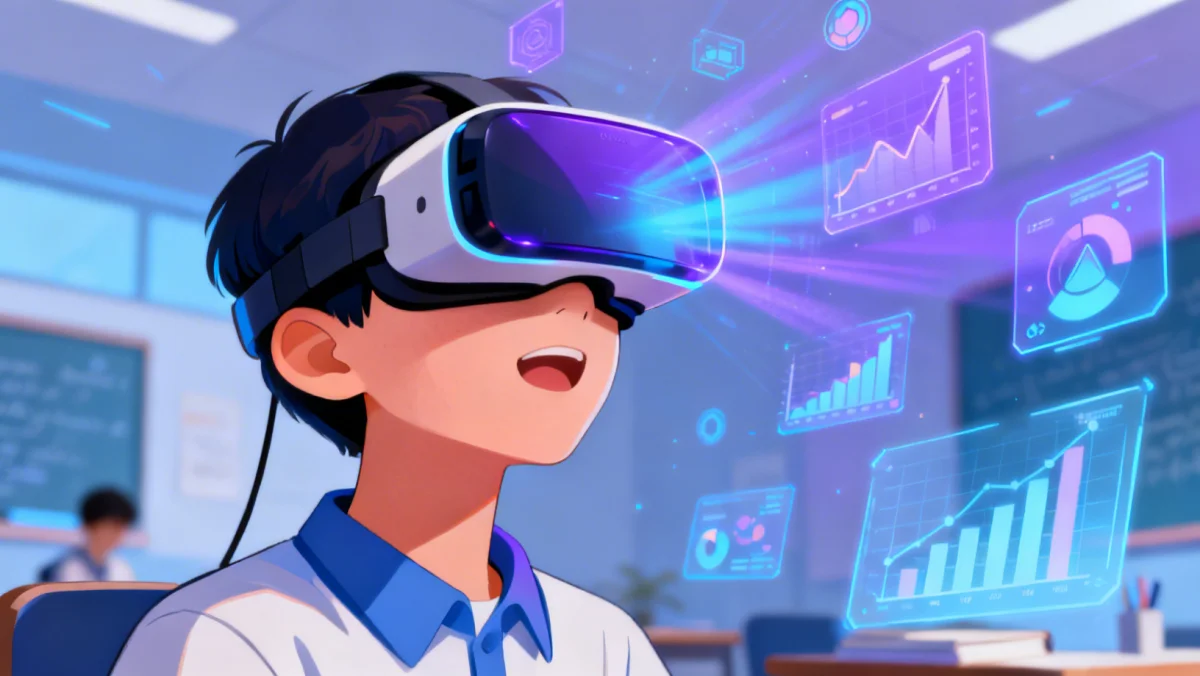
Virtual Reality (VR) and Augmented Reality (AR) technologies are poised to transform passive learning into active, immersive experiences. By 2026, these tools will be more accessible and integrated into classrooms, offering students unparalleled opportunities to explore concepts in dynamic, three-dimensional environments. Imagine dissecting a virtual frog without ethical concerns or visiting ancient Rome from your desk.
These immersive technologies can break down geographical and logistical barriers, bringing the world into the classroom and expanding learning beyond textbooks. Students can interact with historical events, scientific phenomena, and complex machinery in ways that were previously impossible, fostering deeper understanding and retention.
Creating engaging learning environments
VR and AR provide unique ways to engage students by making abstract concepts tangible and exciting. This engagement is a critical factor in boosting learning efficiency, as students are more likely to retain information when they are actively involved and interested in the subject matter. The shift from passive observation to active participation is profound.
- Interactive simulations: Students can conduct virtual experiments, explore human anatomy, or design architectural structures.
- Field trips without travel: Visit historical sites, distant ecosystems, or even other planets from the classroom.
- Skill development: Practice complex procedures in a safe, simulated environment, from surgery to engineering.
- Enhanced collaboration: Students can collaborate in shared virtual spaces, working together on projects regardless of physical location.
The sensory richness of VR and AR experiences strengthens memory encoding and retrieval, making learning more effective and enjoyable. By providing hands-on (or rather, minds-on) experiences, these technologies address different learning styles and cater to the diverse needs of students, leading to a more robust educational outcome.
The impact of blended learning and hybrid models
Blended learning, a pedagogical approach that combines online educational materials and opportunities for interaction with traditional classroom methods, has gained significant traction. By 2026, hybrid models are expected to be refined and widely adopted, offering flexibility and personalized learning experiences that cater to diverse student needs and schedules. This approach optimizes both in-person and digital instruction.
These models allow for a more efficient use of classroom time, dedicating it to collaborative projects, discussions, and one-on-one support, while foundational content delivery can occur online. The flexibility offered by blended learning can significantly reduce barriers to education, making it more accessible for students with varying circumstances.
Optimizing learning through flexible structures
The strength of blended and hybrid models lies in their ability to combine the best aspects of both online and offline learning. Students benefit from the structure and social interaction of traditional classrooms, alongside the self-paced, resource-rich environment of digital platforms. This balance is key to improved efficiency.
- Increased accessibility: Online components allow students to access materials and lectures from anywhere, anytime.
- Personalized pacing: Students can review complex topics at their own speed and accelerate through familiar content.
- Enhanced engagement: A mix of activities keeps learning fresh and prevents monotony, fostering greater interest.
- Resource optimization: Educators can leverage digital tools to manage assignments, provide feedback, and track progress more efficiently.
The evolution of blended learning will see further integration of AI to personalize the online component, and VR/AR to enrich in-person sessions. This holistic approach ensures a resilient and adaptable educational system, capable of delivering high-quality learning experiences regardless of external circumstances. The efficiency gains are not just in content delivery but in overall educational resilience.
Data analytics and predictive learning
The strategic use of data analytics in education is a game-changer, moving beyond simple performance metrics to offer predictive insights into student success and potential challenges. By 2026, educational institutions will increasingly leverage sophisticated data analytics tools to understand learning patterns, identify at-risk students, and optimize instructional strategies. This data-driven approach is fundamental to achieving a 25% increase in learning efficiency.
These systems can aggregate data from various sources, including online assignments, participation rates, and assessment scores, to create a comprehensive profile of each student’s learning journey. This allows for timely interventions and adjustments to teaching methods, ensuring that no student is left behind due to unnoticed difficulties.
Informing instructional strategies with insights
Predictive analytics doesn’t just identify problems; it offers actionable insights that empower educators to proactively refine their teaching strategies. By understanding which interventions are most effective for specific learning challenges, teachers can allocate their resources more efficiently and tailor their support to individual student needs. This targeted approach is far more effective than generic assistance.
- Early warning systems: Identify students struggling academically or at risk of dropping out before it’s too late.
- Curriculum optimization: Data reveals which teaching methods and materials yield the best results, informing curriculum development.
- Resource allocation: Direct support services to where they are most needed, maximizing their impact.
- Personalized recommendations: Suggest additional resources or learning paths based on a student’s performance data.
The ability to predict and prevent learning difficulties transforms the educational process from reactive to proactive. It creates an environment where educators are better informed and equipped to guide students towards success, making the entire learning ecosystem more efficient and responsive. This intelligent application of data is a cornerstone of future educational advancements.
Gamification and microlearning revolutionizing engagement
Gamification, the application of game-design elements and game principles in non-game contexts, is proving to be a powerful tool for boosting student engagement and motivation. Coupled with microlearning, which involves delivering content in small, focused bursts, these strategies are set to revolutionize how students interact with educational material by 2026. This dynamic duo keeps learning fun and manageable.
Traditional learning often struggles with maintaining student attention over long periods. Gamification introduces elements like points, badges, leaderboards, and challenges, transforming mundane tasks into exciting quests. Microlearning, on the other hand, breaks down complex topics into bite-sized modules, making information easier to digest and retain.
Making learning enjoyable and effective
The combination of gamification and microlearning creates a highly engaging and efficient learning environment. Students are more motivated to participate when learning feels like a game, and the short, focused nature of microlearning prevents cognitive overload. This approach caters to modern attention spans and promotes continuous, incremental learning.
- Increased motivation: Game mechanics encourage students to achieve goals and compete, fostering a sense of accomplishment.
- Better retention: Small, focused learning chunks are easier to remember and integrate into existing knowledge.
- Immediate feedback loops: Gamified platforms often provide instant feedback, reinforcing correct answers and guiding students.
- Flexible learning: Microlearning modules can be accessed on-demand, fitting into busy schedules and promoting lifelong learning.
These strategies are particularly effective for reinforcing concepts and practicing skills, turning repetitive drills into enjoyable activities. By making learning intrinsically rewarding, gamification and microlearning contribute significantly to a more positive and productive educational experience, directly impacting learning efficiency. Their playful yet potent approach is changing how we view education.
The role of collaborative tools and global classrooms
In an increasingly interconnected world, collaborative tools are becoming indispensable in education. By 2026, these platforms will facilitate global classrooms, allowing students from different geographical locations to work together on projects, share perspectives, and learn from diverse cultures. This fosters essential 21st-century skills such as teamwork, communication, and cross-cultural understanding.
Digital collaboration tools, including shared documents, video conferencing, and project management software, break down the physical barriers of traditional classrooms. They enable students to engage in real-time or asynchronous collaboration, preparing them for a professional world that increasingly values distributed teams and global cooperation.
Fostering teamwork and global understanding
The development of global classrooms through collaborative technology promotes a richer, more diverse learning experience. Students gain exposure to different viewpoints and problem-solving approaches, broadening their horizons and enhancing their critical thinking skills. This global perspective is invaluable in today’s interconnected society.
- Cross-cultural projects: Students collaborate with peers worldwide on shared assignments, learning about different cultures and working styles.
- Enhanced communication skills: Regular interaction with diverse groups improves written and verbal communication.
- Access to diverse expertise: Students can connect with experts and mentors globally, expanding their learning network.
- Development of digital literacy: Proficiency in online collaboration tools becomes a natural outcome of participation.
These tools not only make learning more efficient by streamlining group work but also cultivate a sense of global citizenship. By preparing students to navigate and thrive in a globally connected world, collaborative technologies are paramount to modern education’s mission. They are building bridges and breaking down walls in the pursuit of shared knowledge.
| Key Technology | Impact on Learning Efficiency |
|---|---|
| Artificial Intelligence | Personalizes learning paths, offers adaptive content, and provides real-time feedback. |
| Virtual & Augmented Reality | Creates immersive, interactive learning environments and simulations. |
| Blended Learning Models | Combines online and offline methods for flexible, accessible, and personalized education. |
| Data Analytics | Provides predictive insights into student performance, optimizing instructional strategies. |
Frequently asked questions about education technology in 2026
AI will personalize learning by adapting content to individual student needs, identifying knowledge gaps, and providing instant, targeted feedback. This ensures students receive optimal support, accelerating their understanding and retention of complex subjects.
VR/AR will offer immersive experiences, allowing students to explore virtual historical sites, conduct scientific experiments, and practice skills in safe simulations. This makes abstract concepts tangible and boosts engagement, transforming passive learning into active exploration.
Hybrid learning, combining online and in-person instruction, is rapidly becoming a prevalent model. It offers flexibility, personalized pacing, and efficient use of classroom time, catering to diverse student needs and enhancing overall educational accessibility and effectiveness.
Data analytics will provide educators with predictive insights into student performance, identifying at-risk individuals early. This allows for timely, targeted interventions and curriculum adjustments, optimizing teaching strategies and ensuring better academic success for all students.
Microlearning delivers educational content in short, focused bursts, making it easier to digest and retain. By 2026, it will be crucial for maintaining engagement and accommodating modern attention spans, especially when combined with gamification for enhanced motivation and continuous learning.
Conclusion
The journey towards 2026 marks a pivotal era for education, driven by the strategic integration of advanced technologies. From the personalized pathways offered by AI to the immersive worlds of VR and AR, and the flexible structures of blended learning, the tools emerging are designed to create a more efficient, engaging, and equitable learning experience. Data analytics will empower educators with unprecedented insights, while gamification and microlearning will keep students motivated and focused. These innovations collectively aim to achieve a significant boost in learning efficiency, preparing students not just for academic success, but for a future where adaptability and continuous learning are paramount.
Autor