Education Funding Bill 2026: $50 Billion for School Improvements
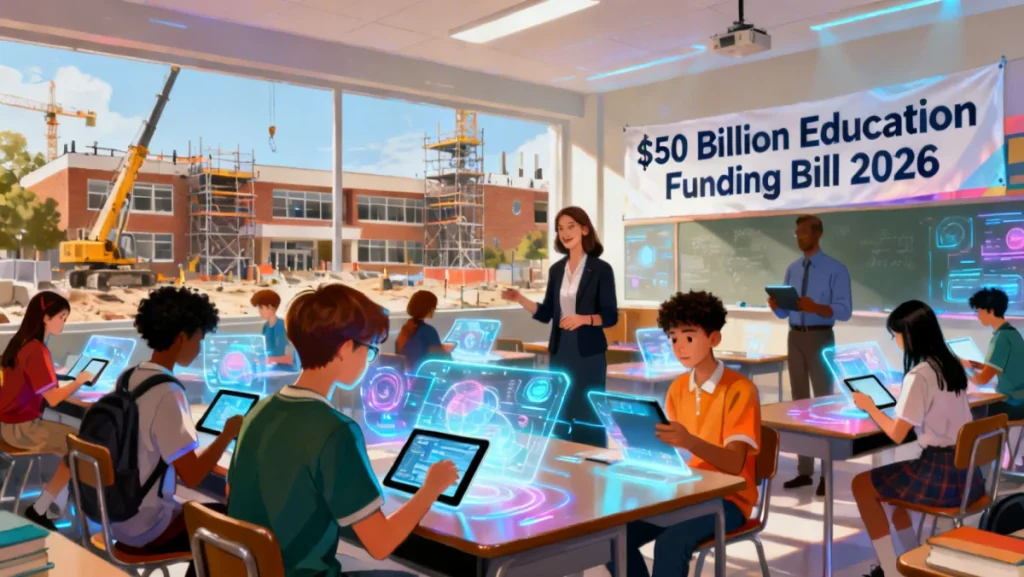
The Education Funding Bill 2026 allocates a substantial $50 billion to national school improvements, targeting critical areas like infrastructure, technology, and teacher development to foster a more robust and equitable learning environment.
The landscape of American education is on the cusp of a significant transformation with the introduction of the Education Funding Bill 2026: $50 Billion Allocated for National School Improvements – RECENT UPDATES. This landmark legislation promises to inject unprecedented resources into our nation’s schools, addressing long-standing challenges and paving the way for a brighter future for students across the United States. But what exactly does this bill entail, and how will it reshape the educational experience?
Understanding the Education Funding Bill 2026
The Education Funding Bill 2026 represents a monumental commitment to public education, aiming to bridge existing gaps and propel schools into a new era of innovation and equity. This initiative, backed by a staggering $50 billion, is designed to touch every facet of the educational system, from crumbling infrastructure to outdated technological resources.
This comprehensive bill didn’t emerge overnight; it’s the culmination of extensive research, stakeholder consultations, and a clear recognition of the urgent needs within our school systems. Its primary objective is to ensure that every student, regardless of their zip code, has access to a high-quality education that prepares them for the challenges and opportunities of the 21st century.
Key Objectives of the Bill
The legislation outlines several ambitious goals, each designed to tackle critical areas of concern within national education. These objectives serve as the foundation for how the $50 billion will be strategically deployed across various programs and initiatives.
- Infrastructure Modernization: A significant portion of the funds is dedicated to repairing and upgrading school buildings, ensuring safe, healthy, and conducive learning environments.
- Technology Enhancement: Investing in cutting-edge educational technology to support digital learning, coding, and STEM initiatives, preparing students for future careers.
- Teacher Development and Retention: Providing resources for professional development, competitive salaries, and support programs to attract and retain high-quality educators.
- Equitable Access Programs: Funding initiatives specifically designed to reduce educational disparities, particularly in underserved communities, ensuring all students have equal opportunities.
In essence, the Education Funding Bill 2026 is more than just a financial injection; it’s a strategic blueprint for transforming American education into a more resilient, innovative, and equitable system for all.
Allocation of the $50 Billion: Where the Funds Go
The $50 billion allocated by the Education Funding Bill 2026 is not a monolithic sum to be spent indiscriminately. Instead, it’s meticulously distributed across various critical areas, reflecting a data-driven approach to addressing the most pressing needs within the national school system. Understanding this allocation is crucial for appreciating the potential impact of the bill.
The framers of the bill conducted extensive analyses to identify sectors where investment would yield the most significant returns in student outcomes and overall school improvement. This strategic distribution ensures that funding reaches areas with the greatest need and potential for positive change.
Prioritizing Infrastructure and Technology
A substantial portion of the funds is directed towards modernizing school infrastructure. Many schools across the nation operate in aging buildings that lack essential facilities, suffer from poor air quality, or are not equipped to handle modern educational demands. This bill aims to rectify these issues, providing safer and more stimulating environments.
Similarly, technology integration is a cornerstone of the bill’s financial plan. The pandemic highlighted the critical need for robust digital learning capabilities, and this funding will equip schools with the hardware, software, and connectivity required to thrive in a digital age. This includes everything from providing devices to students to upgrading school-wide internet infrastructure.
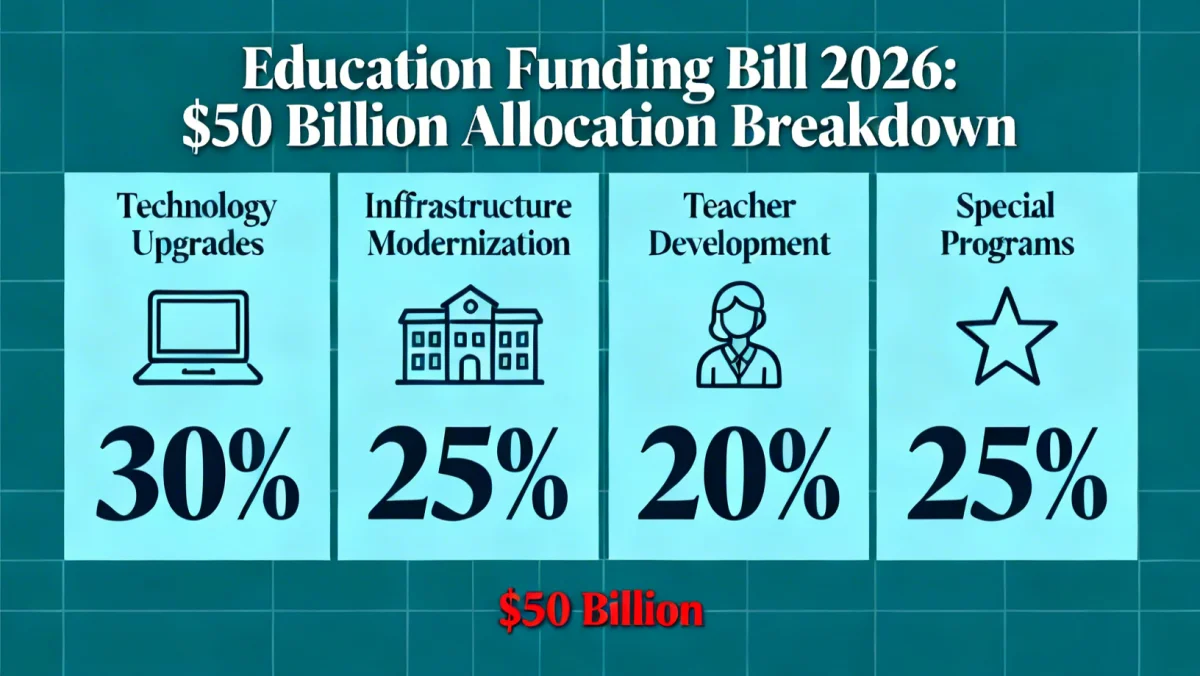
The allocation also extends to supporting specialized programs and initiatives. This includes funding for vocational training, arts and music education, and programs designed for students with special needs. The goal is to ensure a well-rounded education for all, catering to diverse talents and learning styles.
Finally, a significant portion is dedicated to research and development in educational practices. This includes funding pilot programs for innovative teaching methods, evaluating the effectiveness of new technologies, and promoting evidence-based approaches to learning. The aim is to foster continuous improvement and ensure that educational strategies are informed by the latest pedagogical insights.
Recent Updates and Key Legislative Actions
Since its initial proposal, the Education Funding Bill 2026 has undergone several critical updates and legislative actions, refining its scope and ensuring its successful implementation. These developments are crucial for understanding the current status and future trajectory of this transformative legislation.
The legislative process is often dynamic, with amendments and adjustments made to address concerns from various stakeholders, incorporate new data, and ensure the bill’s efficacy. Staying informed about these updates is key to grasping the full implications of the funding.
Congressional Approval and Bipartisan Support
One of the most significant recent updates was the overwhelming bipartisan approval of the bill in both chambers of Congress. This broad support underscores the national consensus on the urgent need for comprehensive educational reform and investment. The cooperative effort highlights a shared vision for strengthening public education.
Following its passage through Congress, the bill received presidential assent, officially becoming law. This final step activated the mechanisms for fund disbursement and the establishment of oversight committees, setting the stage for the practical implementation phases.
- Establishment of Oversight Committees: New federal and state-level committees have been formed to monitor the expenditure of funds, ensuring transparency and accountability.
- Development of Grant Application Guidelines: Detailed guidelines and application processes for states and school districts to access the allocated funds have been published.
- Pilot Programs Launched: Several initial pilot programs in select districts have already begun, testing the efficacy of certain initiatives before broader rollout.
- Public Information Campaigns: Campaigns are underway to inform educators, parents, and communities about the bill’s provisions and how they can benefit.
These legislative actions and subsequent developments demonstrate a clear commitment to not only passing the bill but also ensuring its effective and transparent implementation. The focus is now shifting from policy formulation to practical execution, with a keen eye on measurable outcomes.
Impact on National School Improvements
The projected impact of the Education Funding Bill 2026 on national school improvements is immense, promising a ripple effect that will benefit students, educators, and communities alike. This comprehensive legislation is designed to address systemic issues, fostering an environment where every child can thrive academically and personally.
The improvements are expected to be multi-faceted, ranging from tangible upgrades in facilities to more abstract but equally vital enhancements in teaching methodologies and student support systems. The goal is a holistic transformation of the educational experience.
Enhanced Learning Environments and Resources
With significant investments in infrastructure, schools will see modern classrooms, updated laboratories, and improved athletic facilities. This directly translates into better learning environments that are safe, comfortable, and stimulating. Access to state-of-the-art technology will also empower students with the tools necessary for 21st-century learning, fostering digital literacy and critical thinking skills.
The bill’s focus on teacher development and retention is another critical area of impact. By providing resources for ongoing professional learning and offering more competitive compensation, the bill aims to elevate the teaching profession, attracting and retaining top talent. This will directly translate into higher quality instruction and improved student outcomes.
- Improved Student Performance: Better resources and teaching are expected to lead to higher test scores and overall academic achievement.
- Reduced Achievement Gaps: Targeted funding for underserved areas aims to close the disparities in educational attainment between different demographic groups.
- Increased Student Engagement: Modern facilities and innovative learning tools are likely to make school more engaging and relevant for students.
- Stronger Community Ties: Improved schools often become stronger community hubs, fostering greater parental involvement and local support for education.
Ultimately, the Education Funding Bill 2026 is poised to create a more robust, equitable, and forward-thinking educational system across the nation. The improvements will not just be cosmetic; they are designed to be fundamental and sustainable, laying the groundwork for future generations of learners.
Challenges and Opportunities in Implementation
While the Education Funding Bill 2026 presents a transformative opportunity, its implementation will undoubtedly come with its share of challenges. Navigating these hurdles effectively will be crucial to realizing the full potential of the $50 billion investment and ensuring that the funds genuinely translate into meaningful school improvements.
Successful implementation requires careful planning, effective coordination across multiple levels of government and education, and a commitment to overcoming unforeseen obstacles. Anticipating these challenges allows for proactive strategies to mitigate their impact.
Overcoming Bureaucracy and Ensuring Accountability
One of the primary challenges lies in navigating the complexities of bureaucracy. Distributing $50 billion across thousands of school districts requires robust administrative structures, clear guidelines, and efficient processes. There’s a risk of funds being delayed or misdirected if these systems are not meticulously managed.
Ensuring accountability is equally vital. With such a significant public investment, there’s a strong imperative to track how funds are spent and to measure the tangible outcomes. This requires transparent reporting mechanisms and rigorous oversight to prevent waste, fraud, and abuse. The bill includes provisions for audit and review, but their effectiveness will depend on diligent execution.
However, these challenges also present significant opportunities. The sheer scale of the funding allows for innovative solutions and large-scale pilot programs that might not have been feasible before. It provides an opportunity to rethink traditional educational models and invest in cutting-edge pedagogical approaches.
- Innovation in Procurement: Opportunity to develop more efficient and cost-effective ways for schools to acquire technology and construction services.
- Cross-District Collaboration: Encourages sharing of best practices and resources among districts facing similar challenges.
- Community Engagement: Provides a platform for greater community involvement in school planning and decision-making processes.
- Long-Term Strategic Planning: Allows districts to undertake multi-year strategic planning for improvements, rather than relying on short-term fixes.
By proactively addressing potential pitfalls and capitalizing on the opportunities, the implementation of the Education Funding Bill 2026 can set a new standard for national educational investment and reform.
The Future of Education Post-2026 Funding
The successful implementation of the Education Funding Bill 2026 is poised to fundamentally reshape the future of education in the United States. Beyond the immediate improvements, the long-term vision is to create a more resilient, adaptive, and equitable educational system that can meet the evolving needs of students and society.
This bill isn’t just about fixing current problems; it’s about building a foundation for sustainable growth and innovation in education for decades to come. The investments made today will have lasting repercussions on how future generations learn and prepare for their lives.
A More Equitable and Technologically Advanced System
One of the most significant long-term outcomes is the potential for a truly equitable educational system. By targeting funds to underserved communities and focusing on reducing achievement gaps, the bill aims to ensure that every child, regardless of socioeconomic background, has access to the same high-quality educational resources and opportunities.
Furthermore, the emphasis on technology integration will lead to a more tech-savvy generation of students and educators. Schools will become hubs of digital innovation, preparing students not just for existing jobs but for future careers that haven’t even been imagined yet. This includes fostering skills in areas like artificial intelligence, data science, and advanced technical trades.
The bill also envisions a shift towards more personalized learning experiences. With enhanced technology and better-supported teachers, schools will be better equipped to tailor educational approaches to individual student needs, fostering deeper engagement and more effective learning outcomes. This move away from a one-size-fits-all model represents a significant evolution in pedagogical practice.
Moreover, the investments in teacher development are expected to elevate the status of the teaching profession, attracting more talented individuals and fostering a culture of continuous learning among educators. This will create a dynamic and highly skilled teaching workforce, which is crucial for sustained educational excellence.
The Education Funding Bill 2026 is not merely a financial package; it is a catalyst for a comprehensive transformation in how education is delivered, experienced, and valued across the nation. Its legacy will be measured by the generations of students it empowers and the innovative educational landscape it helps to cultivate.
| Key Aspect | Brief Description |
|---|---|
| Total Funding | $50 Billion allocated for national school improvements. |
| Key Areas | Infrastructure, technology, teacher development, equitable access. |
| Recent Updates | Bipartisan congressional approval, presidential assent, pilot programs launched. |
| Expected Impact | Enhanced learning environments, reduced achievement gaps, modern education system. |
Frequently Asked Questions About the Education Funding Bill 2026
The primary goal is to allocate $50 billion for national school improvements, focusing on modernizing infrastructure, enhancing educational technology, supporting teacher development, and promoting equitable access to quality education across the United States. It aims to create a more robust and future-ready learning environment for all students.
The distribution will follow a detailed set of guidelines and grant application processes established by federal oversight committees. Funds are typically allocated based on need, student population, and specific project proposals submitted by states and individual school districts, ensuring strategic investment where it’s most impactful.
Schools can expect significant upgrades in physical infrastructure, including repairs and new construction. There will also be substantial investment in digital learning tools, high-speed internet, and STEM resources. Additionally, funds will support professional development for teachers and programs to address educational disparities.
The bill includes specific provisions and targeted funding to support underserved communities and schools with high proportions of disadvantaged students. By focusing on equitable access to resources, technology, and highly qualified teachers, it aims to reduce achievement gaps and ensure all students have an equal opportunity for success.
Following its recent presidential assent, the bill’s implementation has already begun with the establishment of oversight committees and the release of grant guidelines. Pilot programs are underway, and broader initiatives are expected to roll out over the next few years, with continuous monitoring and evaluation.
Conclusion
The Education Funding Bill 2026 marks a pivotal moment for American education. With a robust allocation of $50 billion, this legislation is set to usher in an era of unprecedented improvements in national schools. From revitalized infrastructure and cutting-edge technology to enhanced teacher support and a steadfast commitment to equity, the bill addresses critical needs with a comprehensive and forward-thinking approach. While challenges in implementation are inevitable, the collective resolve to overcome them and realize the bill’s full potential is strong. This initiative promises not just to repair and upgrade, but to fundamentally transform the educational landscape, empowering future generations with the knowledge and skills necessary to thrive in an ever-evolving world.
Autor